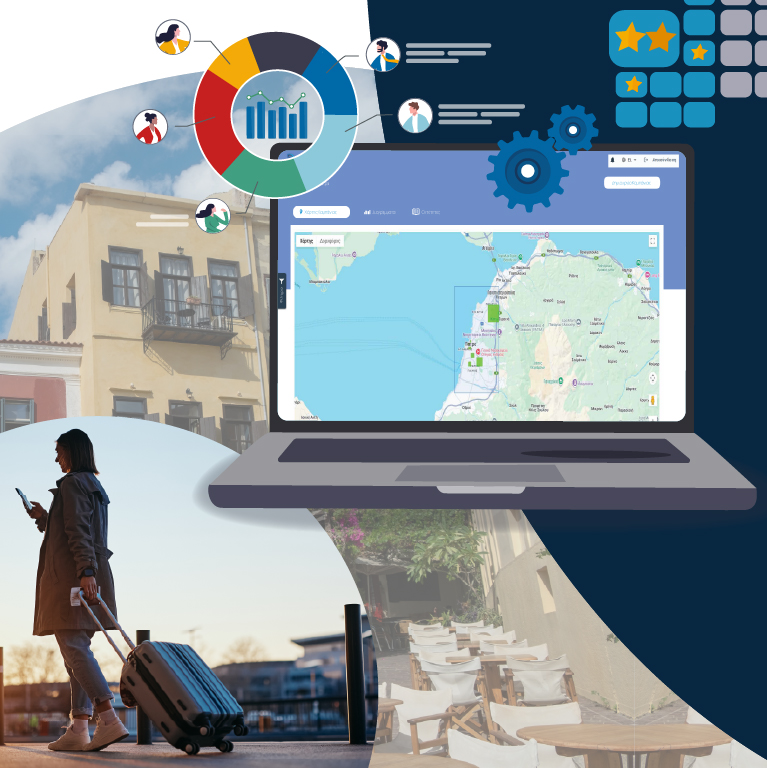

From Data to Decisions: Rethinking How Destinations Are Managed
Tourism generates data at every touchpoint — searches, bookings, visits, reviews, obility, interactions. Yet in most destinations, this data remains underutilized.
Not because it does not exist, but because it is not connected.
As a result, many decisions around promotion, planning and visitor management are
still based on assumptions, fragmented reports or delayed insights.
Data is everywhere
insight is not.
Destinations today have access to more data than ever before.

- website and app interactions
- campaign performance metrics
- social media signals
- third-party platforms and APIs
- operational and local data sources
However, this data typically lives in silos.
Different teams use different tools. Different stakeholders rely on different datasets. There is no shared view of what is actually happening across the destination. Without integration, more data does not lead to better decisions, it simply increases complexity

The gap between
data and action.
Even when data is available, it often fails to influence decision-making in a meaningful way.
Common challenges include:
- lack of real-time visibility
- difficulty in combining multiple data sources
- limited ability to translate metrics into actions
- delayed reporting cycles that reduce responsiveness
This creates a gap between what is known and what is done. Insights arrive too late, or in a form that is not actionable.
What “data-driven” should actually mean
Being data-driven is not about having dashboards.
It is about creating a continuous loop:
data → insight → action → evaluation → improvement.
For this to work, destinations need:
- a unified data layer
- consistent metrics across stakeholders
- tools that connect analysis with execution
- the ability to act in near real-time
Without this, “data-driven” remains a label, not a capability.
Connecting data
with destination management
When data becomes part of everyday operations, the impact is tangible.
- marketing actions can be adjusted based on performance
- visitor flows can be monitored and managed more effectively
- demand patterns can inform planning and resource allocation
- stakeholder coordination becomes more aligned and evidence-based
Decisions shift from reactive to proactive.

From reporting
to intelligence
The key shift is moving from reporting to intelligence.
Reporting answers the question: What happened?
Intelligence answers: What should we do next?
This requires not only access to data, but also the ability to:
- interpret patterns
- identify trends
- connect signals across sources
- support forward-looking decisions
Data alone does not improve destination management.
What matters is how it is structured, connected and used.